Quick answer: Braces do not hurt when they go on. Most people feel soreness or pressure for about three to five days after their braces are placed and for a day or two after each adjustment. The discomfort is usually mild, fades on its own, and is easy to manage with soft foods, orthodontic wax, and an over-the-counter pain reliever if your orthodontist says it is okay.
Key Takeaways
- Getting braces put on is painless. There are no needles or drilling.
- Soreness usually peaks on day two or three and is mostly gone within a week.
- Adjustment visits can bring back mild pressure for a day or two.
- Cheeks and lips may feel rubbed for the first couple of weeks until they toughen up.
- Sharp or lasting pain is not normal. Call your orthodontist if a wire pokes or a bracket comes loose.

Does getting braces put on hurt?
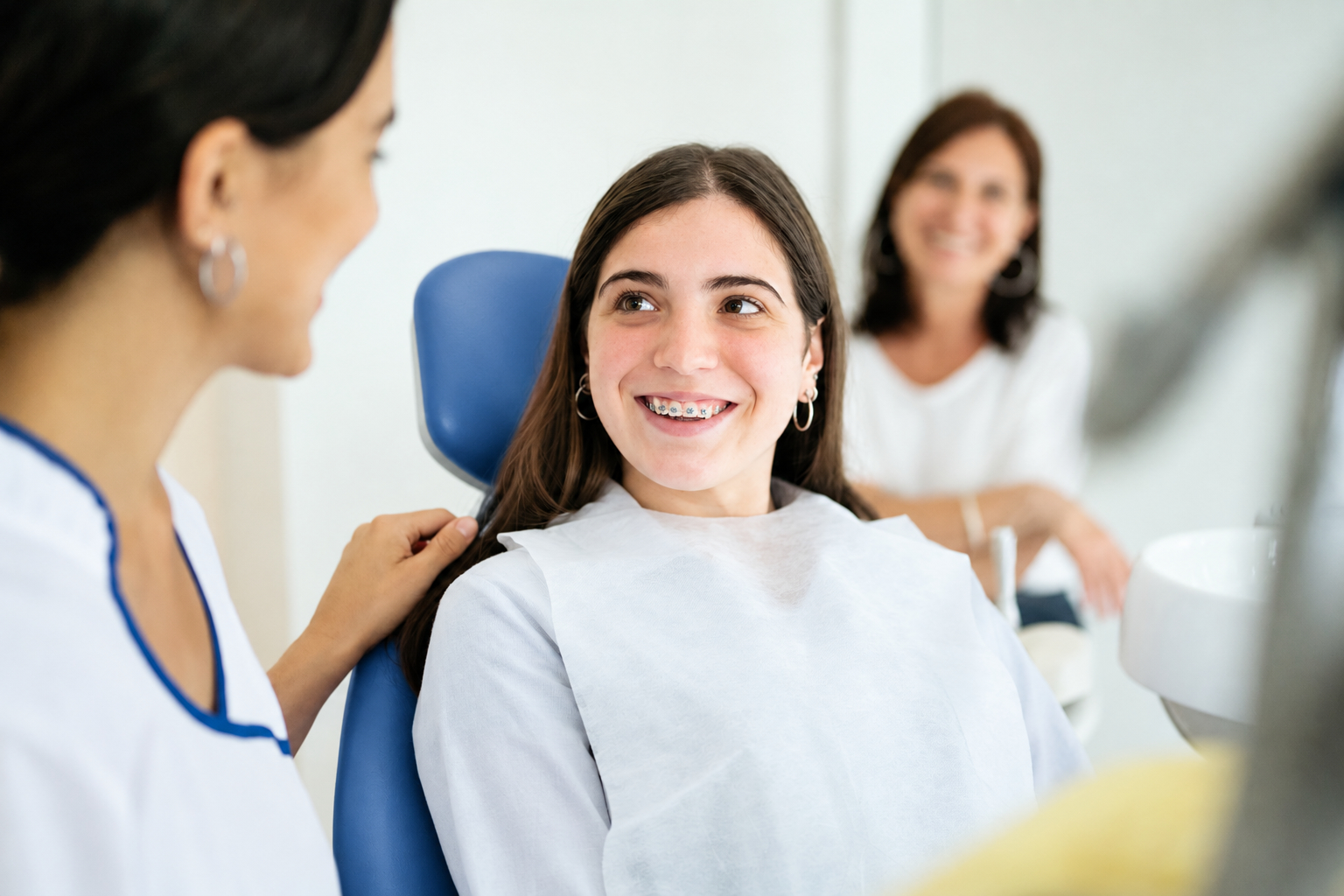
No. Placing braces is one of the easiest appointments in orthodontics. The teeth are cleaned and polished, a gentle conditioner is applied, and each bracket is set in place with a special adhesive that hardens under a blue light. Then the archwire is threaded through the brackets. Most patients say the hardest part is keeping their mouth open for a while.
The same is true for metal braces and clear ceramic braces. The placement process is nearly identical.
Why do teeth feel sore after getting braces?
Teeth feel sore because they are starting to move. The archwire puts light, steady pressure on the teeth, and the ligament that holds each tooth in the jaw responds by remodeling. That process causes a dull ache or tenderness, especially when biting down. It is a sign the braces are working, not a sign that something is wrong.
How long does braces pain last?
For most people, soreness shows up a few hours after placement, peaks around the second or third day, and fades within a week. After that, many patients forget they have braces most of the time.
| Stage | What it feels like | How long it usually lasts |
|---|---|---|
| Braces placement day | No pain during the visit. Mild pressure starts a few hours later. | Same day |
| First week | Dull ache and tender teeth, especially when chewing. | 3 to 5 days |
| Cheeks and lips adjusting | Rubbing or small sore spots where brackets touch. | 1 to 2 weeks |
| After adjustments | Light pressure similar to the first week, but milder. | 1 to 2 days |
| Braces removal | Pressure as brackets pop off. Not painful for most people. | A few minutes |
Do braces hurt after adjustments?
A little. When your orthodontist changes the wire or adjusts the braces, the teeth get a fresh round of pressure. It usually feels like a milder version of the first week and fades in a day or two. Scheduling adjustments when you can eat soft food that evening helps.
How can you make braces hurt less?
Most braces soreness can be handled at home with a few simple steps:
- Eat soft foods for a few days. Yogurt, pasta, eggs, soup, and smoothies are easy on tender teeth. See our guide on what you can eat with braces for more ideas.
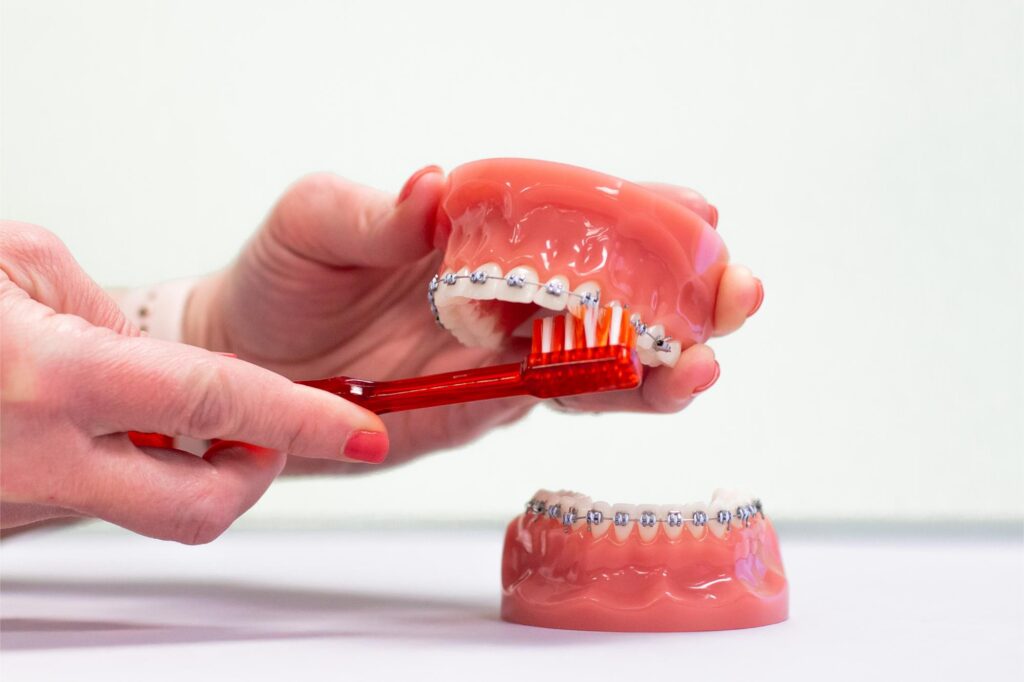
- Use orthodontic wax. Press a small piece over any bracket or wire that rubs your cheek or lip.
- Rinse with warm salt water. Half a teaspoon of salt in a cup of warm water soothes sore spots inside the mouth.
- Try something cold. Cold water or a cold smoothie can calm aching teeth and gums.
- Take an over-the-counter pain reliever if needed. Follow the label and check with your orthodontist first.
Do clear aligners hurt less than braces?
Many people find clear aligners a bit gentler because there are no brackets or wires to rub the cheeks. Aligners still move teeth, though, so it is normal to feel pressure for a day or two when you switch to a new set of trays. The overall experience is similar: short stretches of mild soreness followed by long stretches of feeling normal.
When is braces pain not normal?
Soreness that slowly fades is expected. Call your orthodontist if you notice any of the following:
- A wire poking your cheek that wax does not fix
- A loose or broken bracket
- Pain that gets worse after the first week instead of better
- Swelling or a sore that does not heal
Most of these are quick fixes at the office.
Is it worth it?
For the vast majority of patients, a few sore days here and there are a small trade for a healthier bite and a smile they love. Kids, teens, and adults all handle braces well, which is why we offer orthodontics for all ages. If you want to compare every option side by side, visit our treatment options page.
Frequently Asked Questions
Do braces hurt more for adults than for kids?
Adults and kids feel the same kind of pressure. Some adults notice soreness a little more because their bone is more mature, but the discomfort is still mild and short-lived for most people.
What is the most painful part of braces?
For most patients, the first three to five days after placement are the most uncomfortable. Placement itself and removal are not painful.
Can I take pain medicine for braces soreness?
Most people can use an over-the-counter pain reliever as directed on the label. Ask your orthodontist which option is best for you.
Do rubber bands on braces hurt?
Elastics add a little extra pressure for the first few days you wear them. Wearing them consistently actually keeps soreness lower than taking them on and off.
How do I stop braces from rubbing my cheeks?
Place a small ball of orthodontic wax over the bracket or wire that is rubbing. Within a week or two, the inside of your cheeks usually toughens up.
Have more questions? Dr. Leah Sebastian sees patients of all ages at our Shelbyville orthodontic office and our Frankfort orthodontic office. Schedule a consultation or start with a virtual smile assessment from home.
